Project Planning
- Preconstruction budget and schedule review
- Permitting, inspections and owner reviews tracked to closeout
- Specialty trade partners scheduled, coordinated and supervised by our superintendent
- Closeout records, warranties and as-built drawings delivered with the building
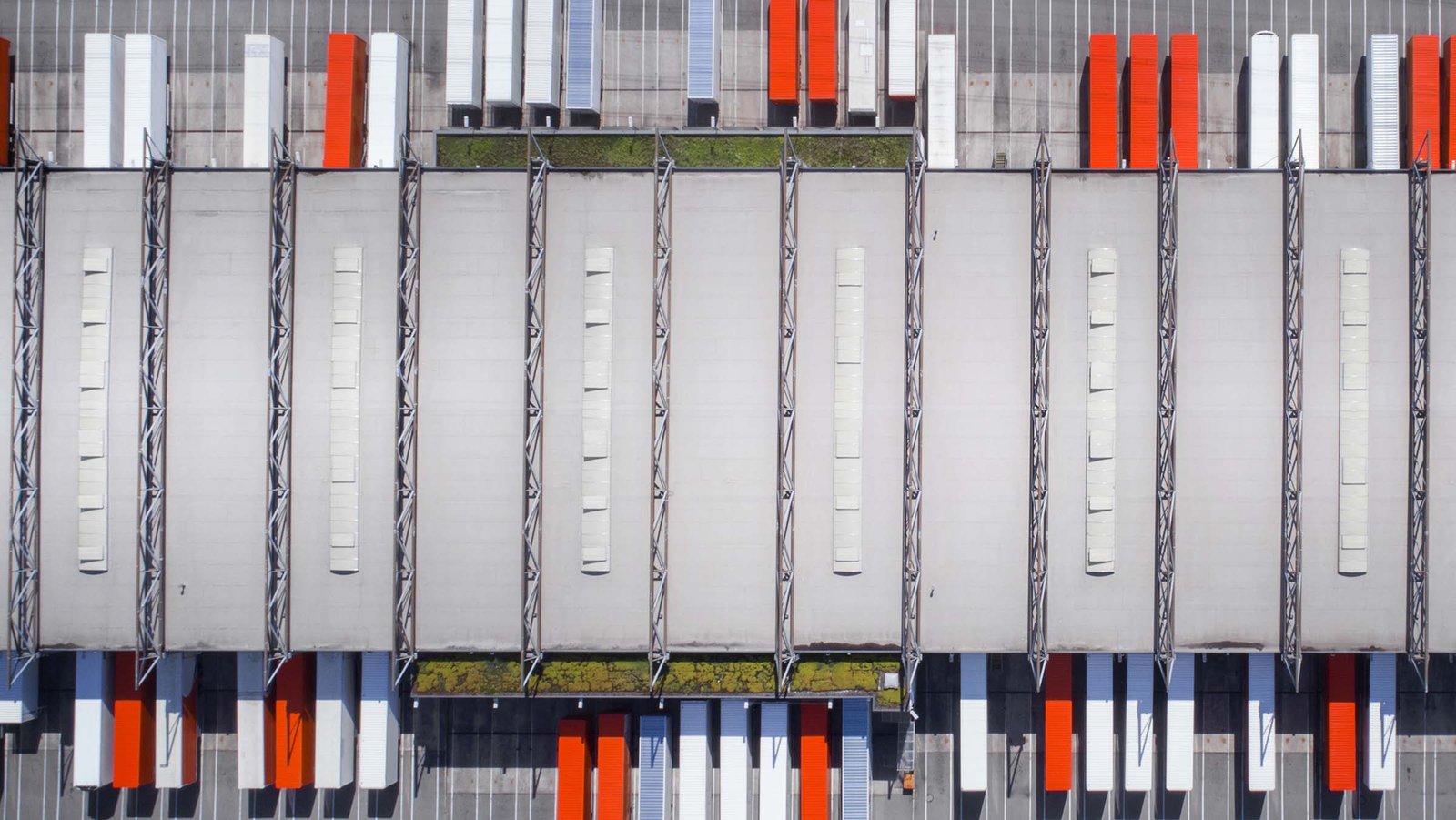
A truck terminal makes money by keeping freight moving, and the building is just the place where one truck hands to another. A cross-dock has doors on two sides and very little storage in between, so a pallet comes off one trailer and goes onto another in minutes. Everything about the structure serves that flow: a narrow building, many doors, a deep paved yard and enough lighting to work at night.
New Mexico has the kind of freight geography that supports these buildings. Interstate 40 passes Gallup alongside the BNSF Southern Transcon, with interchanges from about exit 16 to exit 26, and Santa Rosa has three I-40 exits where I-40, US 54 and US 84 meet. Moriarty has I-40 exits and a business park next to the interstate. These are the spots where a carrier may want a terminal.
We build terminals for carriers who want their own space and for developers who build for lease. The shared goal is a durable yard, a layout that keeps trucks from blocking each other, and a building that can handle thousands of loads each year.
Flow Before Footprint
The most useful drawing at the start of a terminal project is not the floor plan but the truck path. We map where trucks enter, where they stage, how they back to doors and where they leave. A good plan avoids crossing paths and gives drivers room to maneuver without hitting parked trailers. Turning radii and apron depth drive the site size more than the building does.
Many terminals are long and narrow, with doors spaced evenly, and the shape affects structure and fire protection. We also plan for trailer parking and drop yards, which need paving suited for stationary heavy loads, and lighting that makes night work safe.
Corridors Where Terminals Make Sense
The state's freight lines tell us where terminals sit. Belen is bounded on the west by I-25 and has a BNSF rail yard that is a major division point on the Southern Transcon, with I-25 exits 190, 191 and 195 serving the town. Gallup has BNSF and I-40 side by side, and the Southwest Chief stops at its depot.
Owners considering Gallup or Santa Rosa typically want space near an interstate exit with enough yard for long combination vehicles. Where freight is stored longer, a distribution center may fit better than a pure cross-dock.
Dock, Yard and Building
A terminal contract has three major parts. The building has a concrete slab and walls sized for dock doors on both faces, with canopies or enclosed docks as the climate suggests. The yard is the larger expense: heavy concrete or reinforced asphalt, lighting, drainage, fencing and gates. The utilities include power, water and fire protection, and sometimes fuel or truck-wash areas.
We build the yard through our truck courts and dock aprons practice, using thickness, subgrade preparation and joint layout appropriate to the traffic. For lots that will hold trailers or employee vehicles, the parking lot construction trade partners handle layout, striping and drainage.
Where We Mobilize
Terminals follow the highways, so we work along them. We travel to interstate towns across the state and plan mobilization the way a carrier plans a run: crew housing, material hauling, inspections and testing all go on the schedule. In remote locations, we are candid about the extra travel cost and help owners decide whether a larger phase makes sense. A distance of a hundred miles from a concrete plant or an inspector changes how we sequence pours and inspections, and we bring that into the first schedule rather than discovering it in the middle of the job.
Our ability to handle site development and utilities matters most in these towns, since power or water may need to be extended a long way before a building can open.
Safety in a Moving Yard
Construction near operating trucks is hazardous. When we build an addition to a working terminal, we separate construction traffic with barriers, post flaggers where paths cross and brief drivers about changes. Night work is lit, and heavy equipment has spotters. We keep a standing meeting with the terminal manager so we know which doors are closed, which lanes are open and when the busiest hours occur.
Inside the dock, we install bollards, wheel chocks, lighting and dock-lock systems that protect forklift drivers. A safe terminal is also a more productive one, since fewer incidents mean fewer delays. Where a carrier also wants to pick, pack or hold goods for customers, the building starts to resemble a logistics fulfillment center, and we adjust the structure and fire protection to match.
What Drives a Terminal Budget
Paving and drainage often cost more than the building. A terminal that handles heavy, repeated loads needs a strong subgrade, thick pavement and sound joints, and we recommend investing there rather than in cosmetic features. Power and lighting add to the cost, as do fencing and gates.
Owners who build for lease should talk to logistics and distribution operators about door counts and yard depth before settling on a design. Their answers can change the footprint and the number of acres required, and we use them to set a budget that matches the market. We also review the permit path early. A rural county may need only a site plan and building review, while a city may add traffic, lighting and landscaping requirements that affect yard size and cost.
Test Your Terminal Layout With Us
Share the lanes you serve, the number of trailers you expect and the land you hold. We will sketch the dock, the yard and the circulation, and tell you honestly what we would change before you buy more land or order a building.
Questions Owners Ask
How many doors should a cross-dock have?
Door count depends on trailers per day and how quickly freight turns. We start with your lane volumes and shifts, then size the building and plan expansion. A common approach is to build the shell for more doors than you open, with the extra bays blanked off.
Concrete or asphalt for the yard?
Concrete lasts longer under heavy, static loads and turning trailers, while asphalt costs less up front and is easier to repair. Many terminals use concrete at the dock apron and asphalt for travel lanes. We show the lifecycle cost of both.
Can you build a terminal on a site with an arroyo?
Yes, but the drainage plan must be right. We work with the engineer to route stormwater around the pad and the yard, and we set finished floor heights above anticipated flows. Monsoon rain moves fast across a flat site.
Do terminals need fuel or wash facilities?
Some do, and those items bring environmental permits and special construction. We include them in the scope when the owner asks, and we coordinate with state regulators as needed.
How do you phase a terminal expansion?
We build new doors and yard on the side away from operating traffic, then connect to the existing building during a short window planned with the operations manager. The goal is to keep trucks moving through the old terminal while the new one is finished.