Project Planning
- Preconstruction budget and schedule review
- Permitting, inspections and owner reviews tracked to closeout
- Specialty trade partners scheduled, coordinated and supervised by our superintendent
- Closeout records, warranties and as-built drawings delivered with the building
Water decides most site work in New Mexico, whether it arrives in a monsoon downpour or has to be carried in a pipe. A parcel that looks flat and dry in May can be a shallow lake in August, and a lot with no sewer line may need a septic system that the code no longer allows in the same form. We start every site conversation with water, because it shapes the grading, the utilities and the cost.
Local conditions bear this out. In Deming, the city article notes that minor flooding sometimes occurs over large areas of flat ground. In Corrales, much of the village lacks a centralized water system or municipal sewage, so many homes use their own wells and septic systems, and newer homes are no longer allowed to install leach fields. Corrales also maintains an extensive system of canals and acequias that carry Rio Grande water to fields and pasture. Anyone building near those channels is working beside living infrastructure.
We listen first to the owner's plans, then we list what the land and the utility providers will allow. The work that follows is mostly invisible when finished, and that is exactly why it deserves the most care.
Reading the Land Before Moving It
We begin with the survey, the geotechnical report and a walk of the site. We look for flow paths, soft spots, caliche outcrops, old irrigation ditches and buried lines. In arroyo country, an apparently dry channel can carry a surge of water with little warning, and the grading plan must respect it. Where a site crosses or borders a ditch or acequia, we coordinate with its owner early.
Soils vary widely across the state. Sandy valley soils compact differently than clay, and caliche can be a rock-hard layer within inches of the surface. We prepare for ripping or blasting where necessary and make sure the owner understands the cost before it appears. The mass grading trade partners carry out the earthwork once the plan is set.
Utilities, Septic and Approvals
Utility work is regulated and reviewed. Water, sewer, power, gas and communications each have their own provider and standards, and the connection points, capacity and fees must be confirmed before design is complete. In places like Aztec, where water is drawn from surface sources including the Aztec Ditch, the Lower Animas Ditch and the Animas River, availability and treatment are part of the planning conversation.
Plumbing and mechanical codes are in transition. The 2024 New Mexico Plumbing Code and Mechanical Code are listed as effective August 1, 2026, with permits issued under either the 2021 or 2024 edition until January 1, 2027. Site utility design connects to the building's plumbing, so we align the two and confirm which edition applies before pipe is ordered.
What Site Development Includes
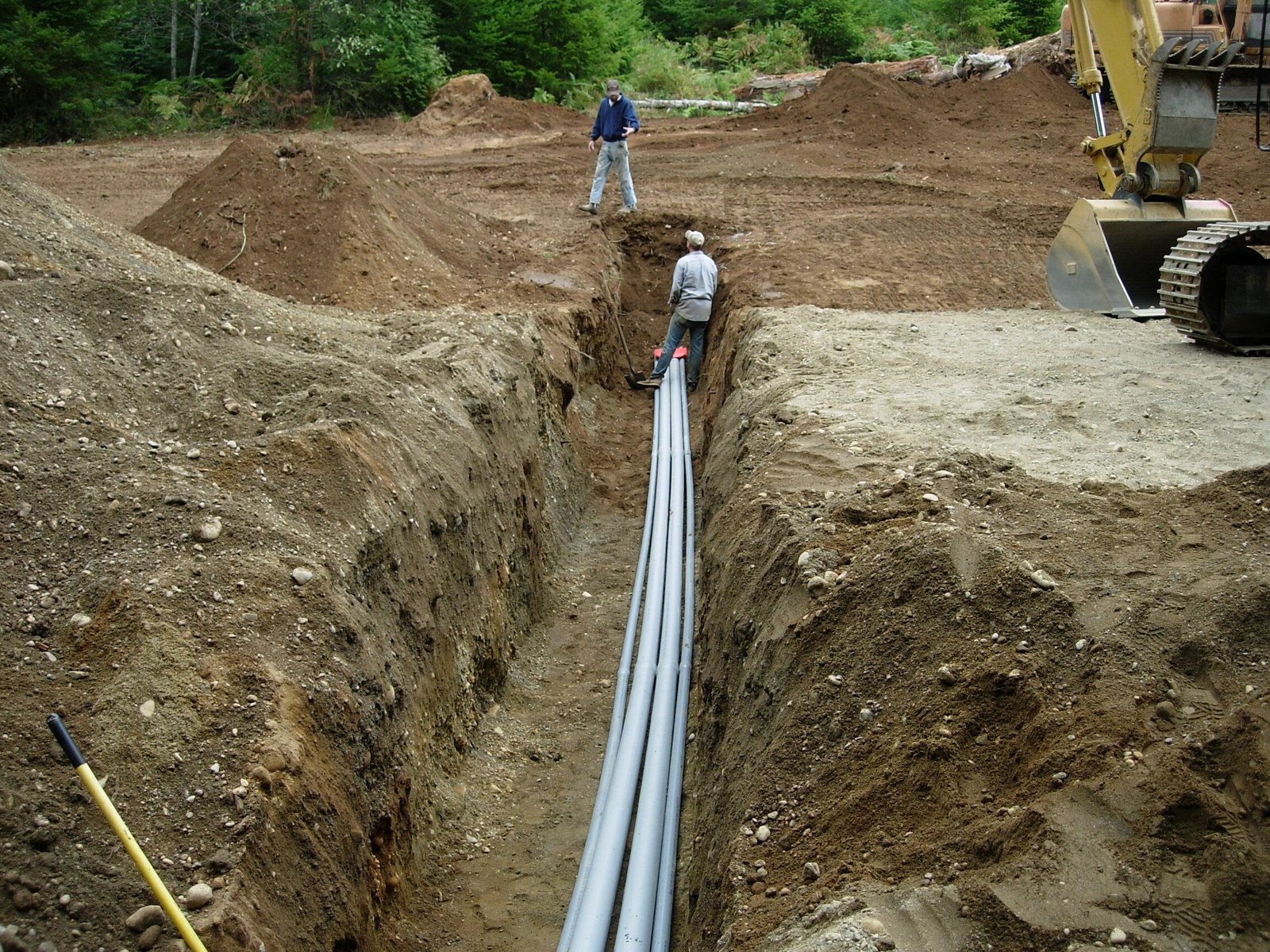
Our site development scope covers clearing, grading, drainage, retention, water and sewer service, fire lines, dry utilities, curbs, paving and erosion control. We also coordinate temporary roads, laydown areas and construction entrances. On many projects the site package is the first work to start and the last to be finalized.
Drainage is a major piece. Stormwater and drainage features, such as swales, culverts, inlets and detention areas, must be sized for the storm event the local authority requires, and they must function after the first monsoon. We build them carefully and inspect them after storms, since a drainage fault is much easier to correct early.
Sites Across the State
We work on sites from the Rio Grande valley to the southern border, the eastern plains and the northern mountains. A site in Corrales faces canals and septic limitations. A site in Deming faces flat ground and flooding. A site in Aztec faces surface water rights and river proximity.
Each place needs a different plan, and we spend time learning the local practices of the building department, the utility and the irrigation district. Remote sites add travel and lodging, which we include in the price rather than discovering later.
Sequencing Utilities Ahead of the Building
Site utilities should be ready when the building crew needs them. Underground lines go in before the slab, and fire lines may need to be tested before the building can be occupied. Monsoon season can interrupt open trenches, so we schedule deep excavation in drier months and keep trenches short and backfilled quickly.
Utility providers have their own lead times for meters, transformers and inspections, and delays there can hold up the project. We submit requests early and track them closely. Developers of multifamily housing and other large projects often need phased utility service, and we plan the work to match.
What Drives Site and Utility Cost
The largest variables are rock, groundwater, distance to services and off-site requirements. A site that needs a long water line, a lift station or a road improvement can cost far more than one at the end of an existing main. Cut and fill balance also matters, since hauling soil on or off the site is expensive.
We prepare early cost ranges for each site so owners can compare options before buying land. For pad sites in retail shopping centers, shared utilities and common drainage can reduce cost per lot, but they must be planned together. Where detail is limited, we state our assumptions and update the numbers as information arrives.
Walk Your Site With Us
Send us the survey or tell us where the land is. We will look at drainage, utilities and soils with you and describe what the site is likely to require.
Questions Owners Ask
How do you deal with caliche?
We probe it before pricing, because it varies from soft to nearly solid. Depending on the depth and hardness, we may rip, hammer or blast it, and then decide whether the material can be reused as fill. The owner sees the plan and the cost for each option.
What if the site has no sewer?
A septic system or a package treatment plant may be needed, subject to soils and local rules. In some areas, such as Corrales, newer homes are no longer allowed to install leach fields, so alternatives must be reviewed with the authority. We confirm requirements before design is final.
How do you control water during construction?
We plan erosion control, temporary diversion and sediment control before earthwork begins. Storm events can move large volumes of water in minutes, so we inspect controls after each event. This protects the site, the neighbors and the owner from violations.
Who pays for off-site utility improvements?
That depends on the utility and the jurisdiction. Some improvements are the owner's responsibility, some are shared and some are covered by fees. We ask the provider early and show the result as a separate line in the budget.
How early should we talk to the utility providers?
Before you buy the land, if possible. Capacity, connection fees and extension distances can change the value of a site more than almost anything else. A short call to the water, sewer and power providers, followed by a written confirmation, gives you the real picture and keeps surprises out of the budget.
Can utilities be installed in winter?
Yes in most of the state, with precautions. Frozen ground, cold concrete and compaction need attention at higher elevations. We adjust methods and schedule, and we avoid placing certain materials when conditions are not suitable.