Project Planning
- Preconstruction budget and schedule review
- Permitting, inspections and owner reviews tracked to closeout
- Specialty trade partners scheduled, coordinated and supervised by our superintendent
- Closeout records, warranties and as-built drawings delivered with the building
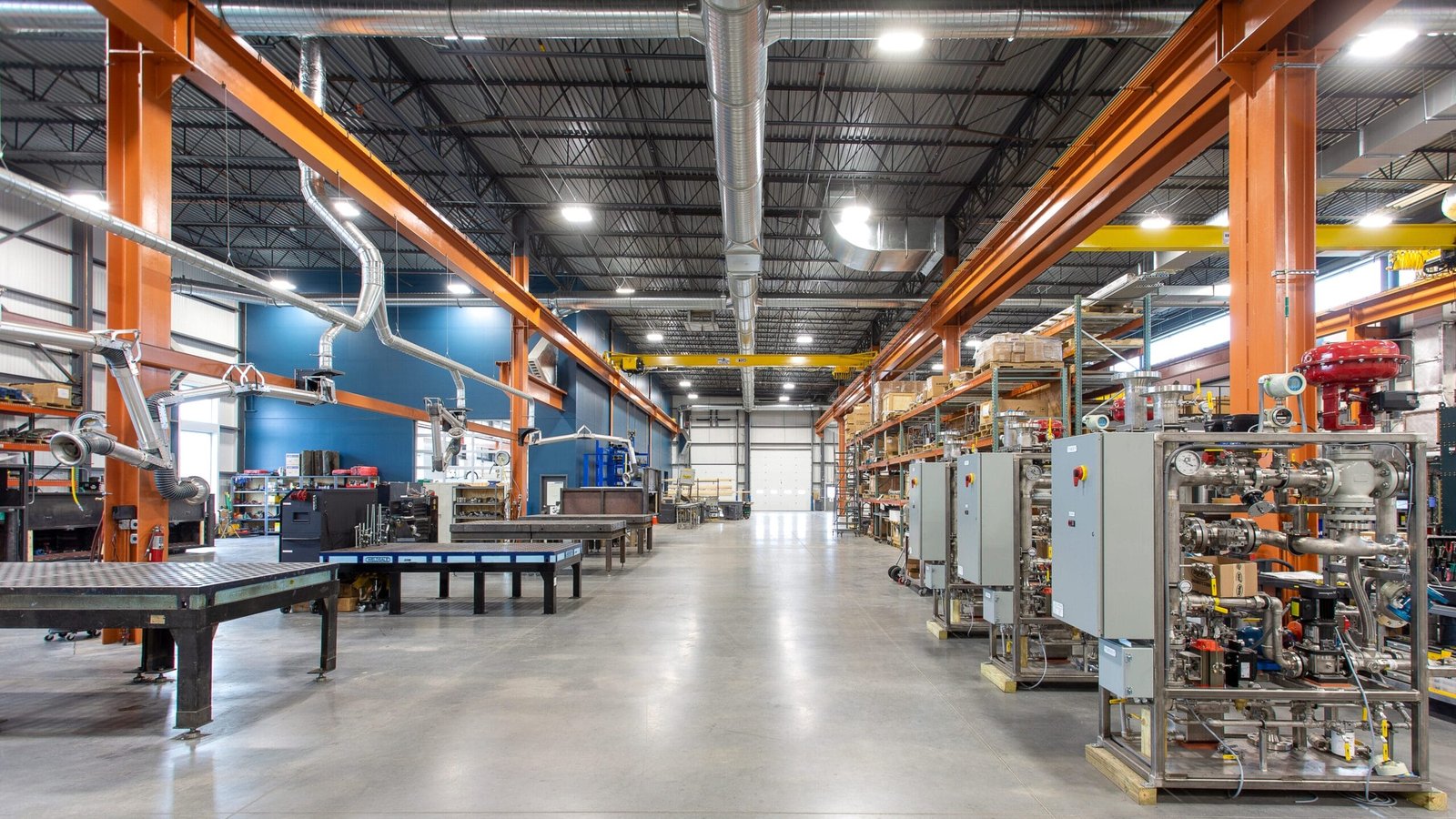
Nobody builds a plant for the sake of the building. The building exists to hold a process, whether that is milk becoming cheese, wafers being packaged, machined parts leaving a shop or uranium being enriched, and every decision we make is measured against what the process needs. Floor flatness, power, compressed air, drainage, ceiling height and the path of a forklift are not details to a manufacturer. They are the plant.
That is why our work with manufacturers starts with a long conversation about operations. We ask about shifts, the weight of the equipment, how product moves through the building, what the environment must be like and how the plant will expand. In the high desert, where utilities and skilled labor can be a half-day drive away, a mistake in assumptions costs real time. We would rather spend a week at the front of the project clarifying the process than a month at the end fixing it.
New Mexico manufacturers include food processors, advanced packaging operations, machine shops, materials producers and energy-related firms, and the projects we see range from small shop expansions to buildings that are among the largest in their communities.
What Manufacturers Are Building in New Mexico Right Now
The picture is varied. In Las Cruces, the state announced on January 27, 2026 that an advanced manufacturer will renovate an existing 45,050 square foot building on 15 acres at the Innovation and Industrial site, investing $13.4 million over its first three years. That is a typical story for the state: reuse an existing shell, upgrade it for process needs and add capacity later. Just north of Farmington, a machining company announced in June 2026 that it would expand onto a 16-acre property, renovating an existing building and adding a new 11,000 square foot facility.
Food manufacturing carries bigger numbers. Southwest Cheese announced a $140 million expansion in Clovis in 2015 that would raise operating capacity by 30 percent, and in Eunice, Urenco USA announced in June 2026 that it would add 2.1 million separative work units of enrichment capacity, supporting 300 to 600 jobs at peak construction. The industries differ, but each depends on a builder who can coordinate a precise, equipment-driven schedule.
Foundations, Slabs and Structure We Manage Closely
Heavy equipment makes demands on concrete. We pour equipment pads, trenches, sumps and floor slabs with attention to flatness, joints and curing, and we coordinate embedded items with the equipment supplier so bolts and sleeves land where they should. Our concrete foundations trade partners handle the heavy slabs and the footings that support them, under our supervision, because the slab is where a plant most often fails to meet its owner's expectations.
Above the slab, we erect steel frames, metal panels and, where a process calls for it, crane-supporting structure. Managing these pieces as one scope lets us adjust when a piece of equipment grows by a foot or a conveyor changes route. Owners find it helpful that one team answers for the slab, the frame and the envelope.
Building Around Equipment Delivery and Commissioning
The critical path in a plant often belongs to the equipment, not the building. We ask for vendor schedules at the start, plan the shell to be weathertight before sensitive machinery arrives and leave knock-out panels or temporary openings so large items can be set without damage. Rigging and setting often occur in a short window that must be rehearsed with the vendor and the crane company.
After the machines are in place, startup and commissioning take time. Utilities must be tested, controls verified and products run through. We plan those weeks into the schedule and keep a punch list focused on items that affect production first, so the owner can begin shipping while we finish the final touches. Where a plant is built in stages, we separate the construction area from the running plant with firm barriers and agreed hours.
Safety in Plants Where the Work Never Fully Stops
An expansion beside a working plant is a shared site. We attend the owner's safety orientation, follow lockout and tag procedures, mark forklift routes and keep trade crews out of process areas unless escorted. Hot work permits, confined space entries and crane lifts follow written plans that the owner reviews before work begins.
Food and chemical plants add special requirements. Sanitary finishes, washdown drains, clean construction practices and separation from raw materials all affect how we build, and we brief trade crews on them. On secured industrial campuses, such as the enrichment complex near Eunice, access, badging and security procedures shape the day, and we prepare for them before mobilizing.
Where a Manufacturing Budget Moves
Utilities and site work frequently drive cost more than the building itself. Three-phase power, gas service, water, wastewater treatment and fire protection can require upgrades that cost as much as a small plant. We ask utilities for capacity letters early, and we price conceptual alternatives so an owner can see how a larger transformer or an extra tank changes the total.
Floor specification is the second area. A slab designed for forklifts, wash-down and heavy point loads is more expensive than a light-duty one, but a failing floor costs far more. We show owners options and the likely service life of each. Interested owners can also read how commercial real estate developers approach spec industrial buildings that manufacturers later lease.
Plants and Support Buildings We Deliver
Our manufacturing plant work includes production halls, warehouses, maintenance shops, offices, truck docks and utility buildings. Process-driven buildings such as food and beverage processing plants add sanitary design and temperature control, and cold rooms and wash areas come with their own details.
Many manufacturers need space for finished goods and shipping. Those buildings share a lot with what we describe for logistics and distribution owners, and we often build both on the same campus, with docks and truck courts sized to the traffic. Our manufacturing facility construction team coordinates them as a single program.
Describe Your Process and We Will Study the Building
Send us your process flow, equipment list and expansion plans. We will review them with you, visit candidate sites and tell you plainly what the building and the utilities will require.
Questions Owners Ask
Can you build an addition without stopping production?
Yes, with planning. We isolate the work area, schedule tie-ins during planned downtime and agree on construction hours, dust control and traffic routes with plant management. The most disruptive steps, such as utility shutdowns and wall openings, are rehearsed and timed to the owner's production calendar.
Should we renovate an existing building or build new?
It depends on the process. An existing shell can save months and money if it has the clear height, column spacing, floor capacity and power you need. We walk candidate buildings with you, test the slab and the roof, and compare the renovation estimate with a new building before you commit.
How do you coordinate with equipment vendors?
We invite them into preconstruction, collect their foundation, utility and clearance requirements and incorporate them in the drawings. During construction, we hold regular calls with vendors and the rigging company so delivery dates and installation sequences stay aligned with the building schedule.
What utility upgrades surprise manufacturers most often?
Electric service capacity and wastewater limits. A utility may need many months to deliver a new transformer, and a food or chemical plant may need pretreatment before discharge. Asking for capacity letters during site selection helps avoid learning about those limits after the land is purchased.