Project Planning
- Preconstruction budget and schedule review
- Permitting, inspections and owner reviews tracked to closeout
- Specialty trade partners scheduled, coordinated and supervised by our superintendent
- Closeout records, warranties and as-built drawings delivered with the building
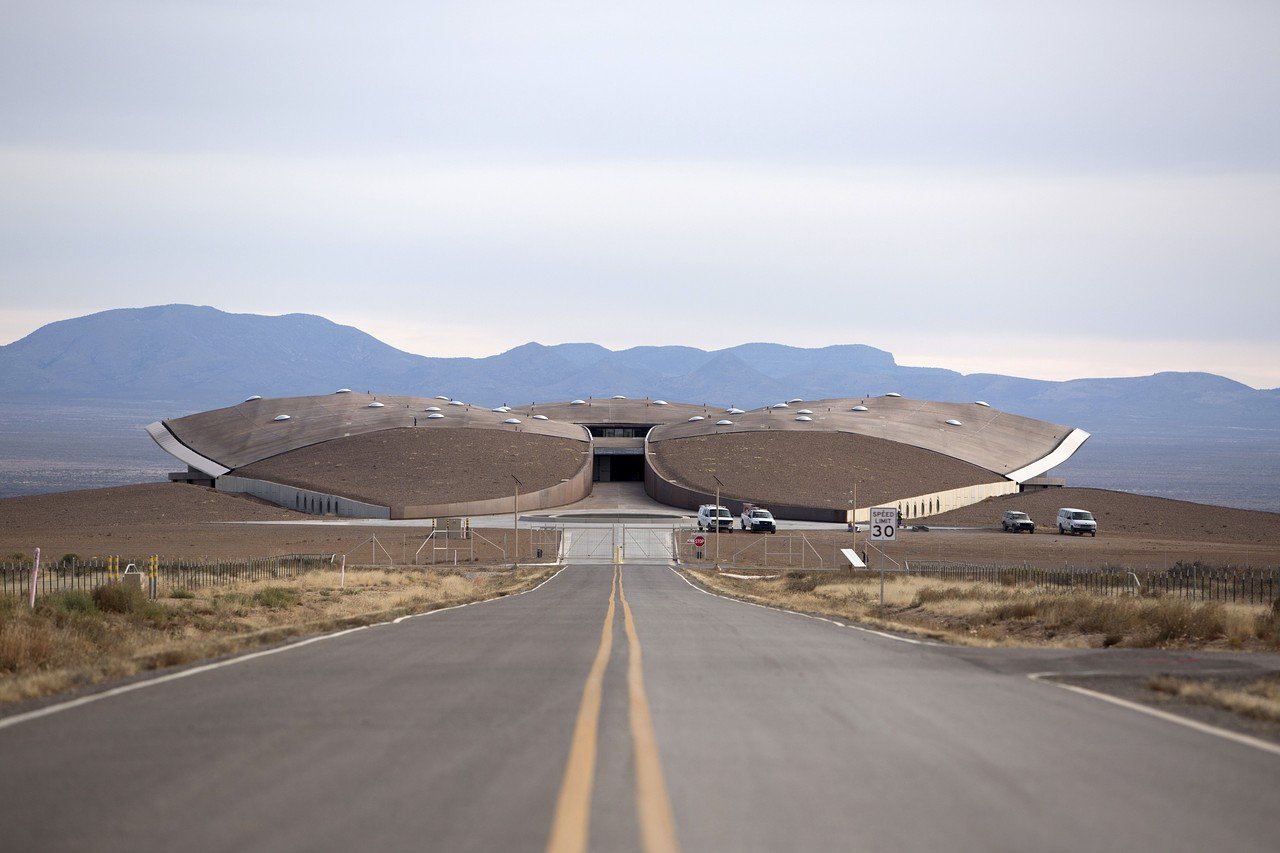
Aerospace operators who want a hangar, a processing building or a support facility at Spaceport America need a builder who can deliver clear-span space, high doors, heavy floors and clean utilities on open desert, a long way from the nearest supplier. That is the kind of work we plan for here: large, simple buildings that must be built almost perfectly and handed over ready for equipment.
A New Mexico Spaceport Authority presentation dated August 12, 2025 says the facilities span 18,000 acres in Sierra County, adjacent to White Sands Missile Range, with easy road access to I-25 and I-10. The same source lists a high elevation of 4,600 feet MSL, 340+ days of sunshine, no salt air corrosion, and access to 6,000 square miles of restricted airspace (R5111 and R5107). Those qualities are part of why an operator would choose the site, and they shape how we build.
The spaceport lies about 20 miles southeast of Truth or Consequences and 45 miles north of Las Cruces on State Trust Land. We approach it as a client would: with attention to access, security, lead times and the practical reality that every worker, load and meal has to travel to the site.
Foundations, slabs and shells we manage closely
Aerospace buildings are won or lost at the slab. We manage foundations, flatwork and structural concrete with careful attention to flatness, joints and curing, since hangar floors carry aircraft, tugs and test equipment. Steel erection and tilt-wall shells are installed with trade partners we coordinate, and we plan crane access and laydown on open ground.
For large doors and tall openings, structural design matters as much as speed. We coordinate with engineers and door manufacturers early, set embeds exactly and confirm tolerances before concrete is placed. Aircraft hangars are simple in concept and unforgiving in detail. A door that binds by half an inch or a floor that is out of flat becomes a daily problem for the tenant, so we survey each stage and correct deviations while the concrete is still green and the steel is still unbolted.
A public investment in a remote site
The Spaceport Authority states that Spaceport America was entirely funded by New Mexico public resources (about $250 million), and that Virgin Galactic sent humans to space from New Mexico in 2021. For a contractor, the point is that this is a publicly owned, mission-driven facility, and work there follows public procurement and documentation practices. We build under those rules for government and public-sector clients.
Tenants and visitors bring their own needs: hangar space, offices, payload processing, storage and sometimes visitor-facing space. We listen first to understand the operation and its schedule, and then we propose a building and a plan. A launch window is a deadline we respect.
Site work on open desert
Open ground sounds easy, but remote sites require roads, utilities, drainage and often power and water extensions across long distances. We start with surveys and geotechnical investigations, then design access roads, pads and stormwater control. Site development and utilities are major cost items here, and we plan them with the building.
Dust, wind and heat are everyday conditions. We control dust with watering and stabilization, schedule concrete for the cooler hours and protect equipment and materials. Monsoon storms produce sudden runoff, so we keep drainage channels clear and open excavations protected.
Security, restricted airspace and safe work
A site beside a missile range and under restricted airspace brings access rules. We prepare workers' credentials in advance, keep equipment lists and schedules current and coordinate crane or lift activity with the site operator. Safety planning includes heat illness prevention, remote emergency response and communication.
On large steel and concrete jobs we maintain fall protection, crane safety plans and traffic control. A remote site means that help is far away, so we confirm first-aid coverage with the trade partners and plan an evacuation route. We would rather be over-prepared than unprepared on open desert. Weather is monitored daily, lightning and high-wind limits are posted, and every shift starts with a briefing that names the day's lifts, hot work and deliveries so nobody is surprised by a neighboring crew.
Logistics for a site far from the city
Materials arrive from Las Cruces and farther away, and Truth or Consequences is the nearest town for crews and services. We organize deliveries, lodging and meals in advance and plan mobilization so crews are not idle. Long-lead items are ordered early and tracked.
A schedule for a spaceport building must include inspection, commissioning and sometimes customer equipment installation. We build in time for those steps and communicate frequently with the tenant. When schedule pressure appears, we explain options and costs openly. Truth or Consequences is the practical base for most crews.
Codes, approvals and public ownership
Commercial buildings are reviewed under the New Mexico Commercial Building Code, which adopts the 2021 International Building Code as amended and took effect July 14, 2023. Public ownership and aviation use may bring additional requirements. We coordinate early with the owner, the design team and the permitting authority.
Because the site sits on State Trust Land, lease terms and land-use approvals are part of the process. We do not guess at them; we ask the owner or the authority what applies and build the answer into the schedule. Documentation, submittals and closeout records are kept complete for public review. At the end we deliver as-built drawings, test reports and warranties, organized so that a tenant's own engineers can find the information they need to install and maintain their equipment.
Plan your Spaceport America project with us
Tell us the use, the equipment and the date. We will review access, utilities and approvals, then outline a plan that fits the operation. Please use the contact form to start.
Questions Owners Ask
What kind of floor does a hangar need?
It depends on the aircraft and equipment. Typically a thick, reinforced, flat slab with sealed joints and slope to drains. We review aircraft weights, tugs and jacks with the operator and design the slab for them.
How far in advance should we plan a building at the spaceport?
As early as possible. Remote sites require utility planning, long-lead orders and approvals that take months. Early involvement gives us time to refine the design, price it and set a realistic schedule.
Can you work under restricted airspace and security rules?
Yes. We coordinate access, credentials and equipment schedules with the site operator, and we plan crane and lift operations in advance. Trade crews are briefed on the rules before they arrive.
Where do crews stay?
Truth or Consequences is the practical base, about 20 miles away. We arrange lodging and travel in advance and include those costs in the estimate. Daily transport is part of the schedule.
Do you build for public owners on State Trust Land?
We build for public owners and follow their procurement and documentation requirements. The lease and approval terms for State Trust Land are confirmed with the owner at the start of the project.