Project Planning
- Preconstruction budget and schedule review
- Permitting, inspections and owner reviews tracked to closeout
- Specialty trade partners scheduled, coordinated and supervised by our superintendent
- Closeout records, warranties and as-built drawings delivered with the building
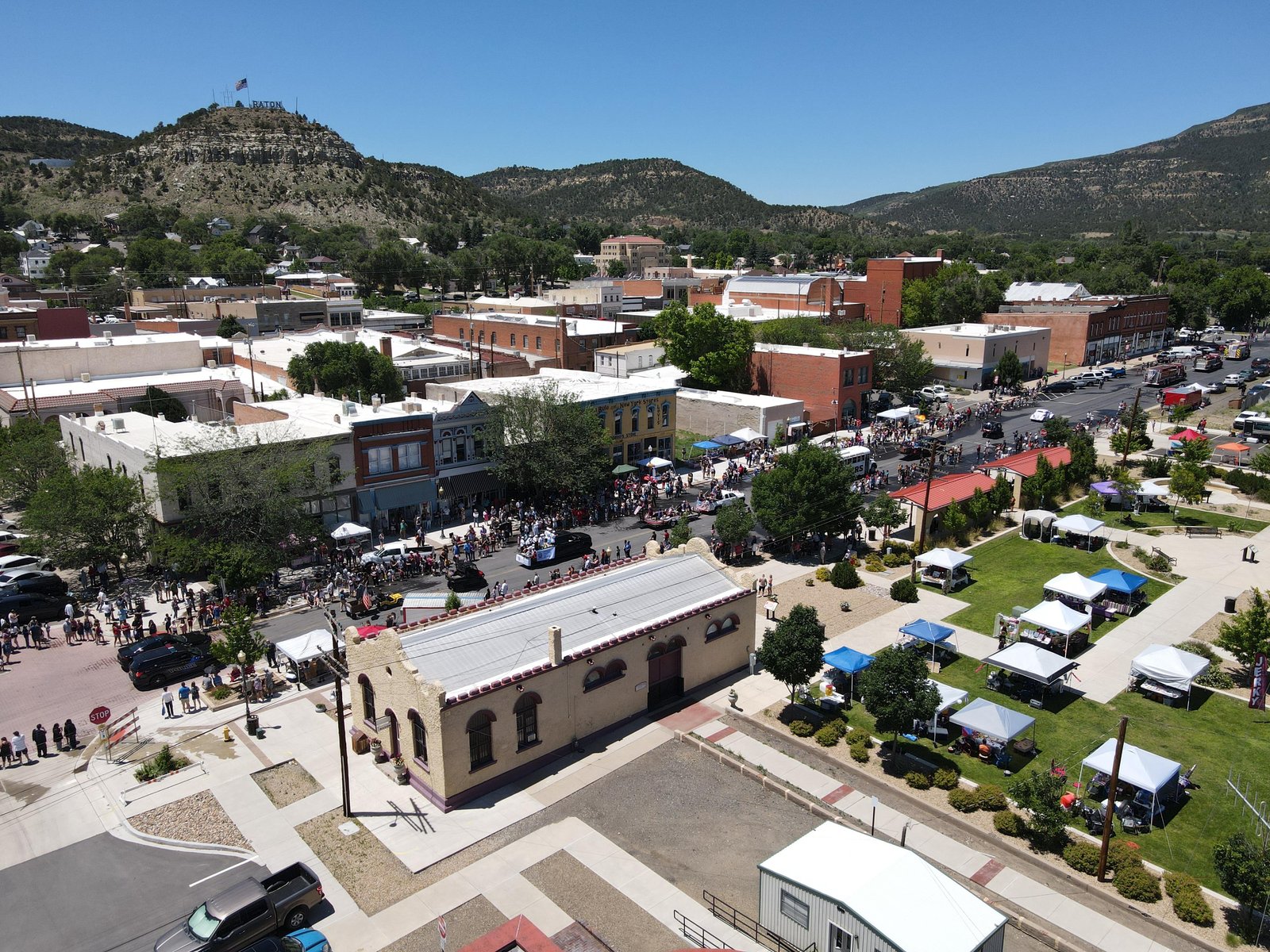
Raton sits just south of a pass that closes the interstate in heavy snow, and that tells you how to schedule a building here. I-25 crosses Raton Pass at 7,798 feet, the speed limit through the pass is 65 mph, and the road can be hard to drive and closes occasionally during heavy winter snow. A concrete truck or a load of steel that cannot cross the pass is a day lost, so we plan around the weather window as much as around the drawings.
Raton sits at 6,559 feet in a cold, semiarid climate, and the Raton Filter Plant station averages 18.60 inches of precipitation and 28.8 inches of snowfall per year. That climate shapes our foundation depths, roof designs, insulation levels and the order in which we build. We try to close the building to the weather before deep winter and carry interior trades through the cold months.
We build commercial, hospitality, civic and light industrial work in Raton for owners who want a clear plan and honest dates. We listen first about your constraints and then list ours. If the work is for a town or school, our municipal government construction approach covers procurement, bonding and public meetings, and owners with several properties can read how we approach Las Vegas and Tucumcari buildings elsewhere in the northeast and east.
Planning around the pass
Raton is served by I-25, US 64 and US 87. Because the interstate crosses Raton Pass, deliveries from the north can be disrupted when snow closes the road. We identify alternate routes and suppliers, order critical materials early and keep a modest stock of items that are hard to replace quickly.
We also build seasonal float into the schedule. A job that would take eight months in a mild climate might take ten here, and we show the owner both numbers. That honesty prevents the unpleasant surprise of an opening date that passes while the roof is still not on.
Cold, wind and ice on the job site
With average snowfall of 28.8 inches a year, our safety plan includes snow removal, ice control, heated workspaces and attention to frostbite and slips. We schedule work so the most exposed tasks, such as roofing and steel erection, happen in the warmer parts of the year where possible.
Cold concrete needs particular care. We use heated enclosures, insulated blankets and mix designs suited to cold, and we do not pour on frozen subgrade. A slab that freezes before it cures may look fine and fail within a few years.
Building tight and keeping it warm
In a cold climate, the building envelope is the first line of defense. We pay attention to continuous insulation, air sealing, vapor control and thermal breaks, and we verify them in the field before we cover them. A building that is tight and well insulated costs less to heat and is more comfortable for the people inside.
Roofs deserve particular attention. We design for snow load, drift and ice dams, and we avoid details that trap snow against walls and doors. Mechanical systems are sized for the coldest days and equipped with sensible controls, so the owner pays for the heat the building actually needs.
Windows and doors are the other weak points. Entrances get vestibules where space allows, glazing is chosen for the cold side of the range, and hardware is specified for freezing conditions. A lobby that fogs up or a door that sticks in January tells customers more about a building than any sign does.
Concrete, framing and metal buildings
We schedule and supervise concrete, framing and the finish work, and we erect pre-engineered metal buildings where they make sense. Footings go below frost depth, slab edges are insulated where the owner wants warm floors, and exterior concrete is air-entrained and sealed.
Scheduling the weather-sensitive work closely lets us react to conditions as they change. When a forecast turns, we can move a pour a day earlier or hold it a day later with the concrete trade partner already planned for it, which saves both time and money.
Where cold-climate budgets move
Winter protection, insulation, snow-load structure and heating costs account for most of the premium. We list them as separate lines so owners can choose. A modest increase in insulation often pays itself back quickly when winter heating costs are high.
Raton Municipal Airport, also called Crews Field, is a city-owned public airport 12 miles southwest of Raton at 6,352 feet, with a 7,615-foot asphalt Runway 2/20 and a 4,425-foot Runway 7/25. Owners who fly in specialists or visitors benefit from the local airport, and we mention it because arrival logistics can affect a hospitality or medical project's schedule and budget. Nearby Cimarron projects share many of these conditions.
A rail and highway gateway
BNSF owns the Raton Pass railroad, inherited when it absorbed the Atchison, Topeka and Santa Fe Railway in 1996, and Amtrak's Southwest Chief still runs over the pass, though freight moved to the Belen Cutoff in 1908. A town on a mountain pass has always served travelers, and the owners we talk to usually have hotels, restaurants or fuel stops in mind. Raton's own history as a rail crossing is a reminder that this location has been a gateway for a long time.
For hospitality groups, public sector owners and local businesses, that means projects with visible, high-traffic sites. We design entrances, parking and lighting for winter use, with snow storage, sanded walks and sheltered doors.
Build in Raton with a plan for winter
Tell us the site, the building and your target date. We will review the weather window, the supply route and the approvals, and give you a plain schedule and budget range.
Questions Owners Ask
How much longer does building in Raton take than in a mild climate?
It depends on the season you start and the type of building. We add time for cold-weather concrete, snow days and delayed deliveries, and we show you the range. Enclosing the building before deep winter is the best way to keep that premium small.
Can you pour concrete in winter?
Yes, with preparation. We use heated enclosures, insulated blankets, suitable mixes and a thawed subgrade. If conditions cannot be controlled we hold the pour, because a frozen slab is not worth the risk.
What if the interstate closes while a delivery is en route?
We monitor closures and weather and keep alternate suppliers where possible. Critical loads are scheduled early in the week. If a delivery is delayed, we adjust the crew's assignments so people stay productive.
What should I specify for roofs in heavy snow?
Design for the local snow load and drift, choose details that shed snow safely and avoid trapping it over doors and walkways. Heat tape and ice protection are sometimes worth the cost. We work with your engineer to set the right balance. Ventilation and insulation matter just as much, because a roof that stays cold keeps snow from melting unevenly and refreezing at the eaves.