Project Planning
- Preconstruction budget and schedule review
- Permitting, inspections and owner reviews tracked to closeout
- Specialty trade partners scheduled, coordinated and supervised by our superintendent
- Closeout records, warranties and as-built drawings delivered with the building
In Cimarron, a building is judged by how well it handles a summer crowd and a winter silence, and we design with both seasons in mind. The village's growth is tied to summer tourism and to its proximity to Philmont, so lodging, food service, retail and camp-related buildings are the natural work. We build them to be warm in January, comfortable in July and easy for a small staff to run.
Philmont Scout Ranch, described as the largest youth camp in the world, covers 140,177 acres in the Sangre de Cristo Mountains in Colfax County and is owned by Scouting America. It is located just four miles south of Cimarron. Visitors, volunteers and staff pass through the village, and businesses that serve them need buildings that open on time and last.
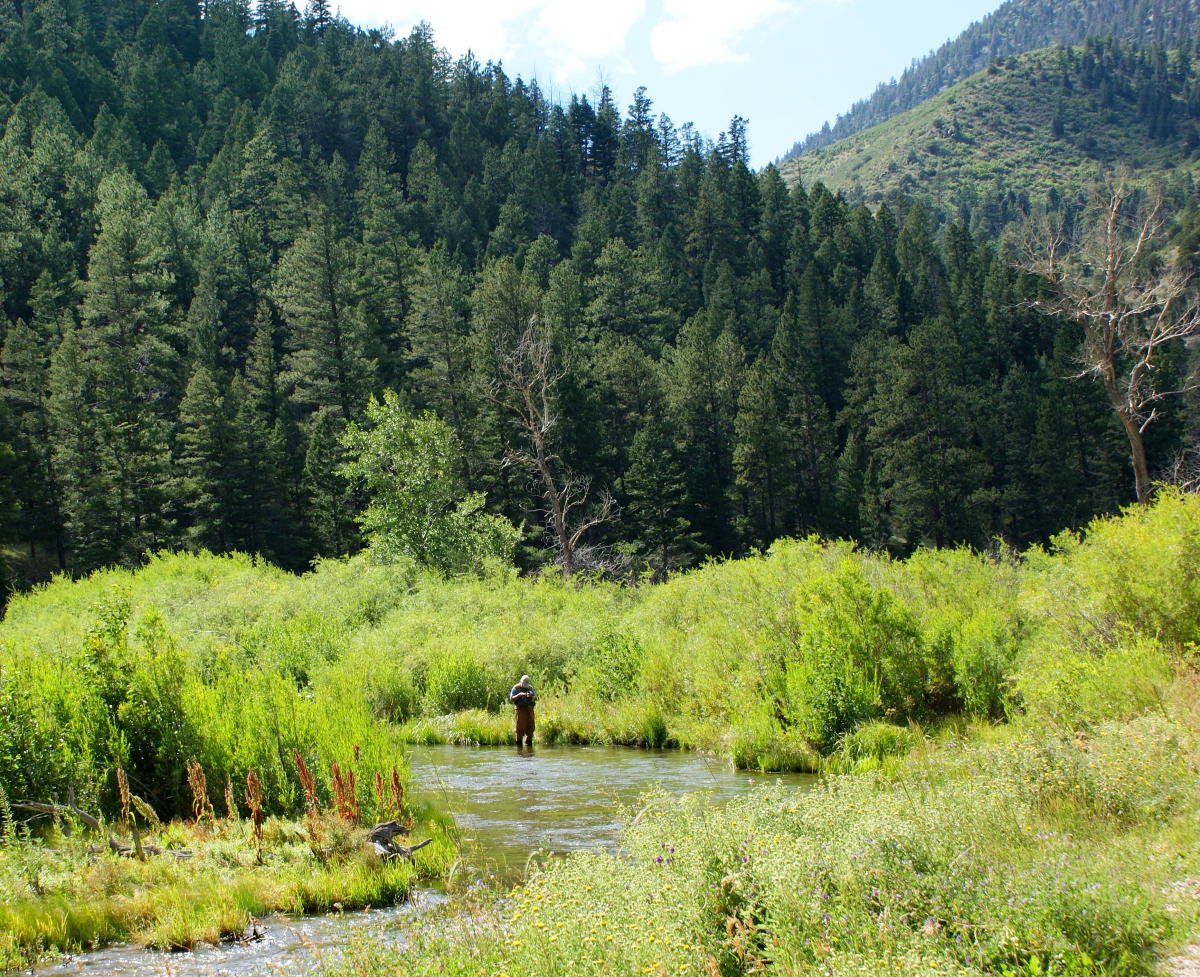
Cimarron sits on the Cimarron River, a tributary of the Canadian River, at an elevation of 6,421 feet, and the work calls for a builder who understands mountain-valley weather, river-edge drainage and the logistics of a small place a long way from a supplier.
Highways into the canyon
U.S. Route 64 passes through Cimarron, leading west up Cimarron Canyon and northeast to Raton, while State Road 58 runs east about 19 miles to Interstate 25. That arrangement means visitors arrive from several directions, and the village is a natural stop. A building with US 64 frontage can capture drive-by customers, while one tucked behind has the advantage of quiet and room for parking.
Northeast on US 64, Raton is the closest town of any size and a natural place to look for supplies. For specialty items we also look farther afield, toward Las Vegas and Taos, and we plan deliveries around winter weather where we can. Lead time is the quiet cost of a remote job, and we try to turn it into a line on the schedule that the owner can see.
Buildings for visitors and for the village
We build inns, cabins, small lodging buildings, restaurants, shops and event spaces, as well as community buildings and offices, for individual owners and for hospitality groups that operate more than one property. Each is sized for the village and designed to be heated and maintained economically. We prefer straightforward construction details that local tradespeople can service for years.
Camp-oriented buildings, such as dining halls, program buildings, equipment storage and staff housing, have specific demands: durability, sleeping and sanitary capacity, accessible routes and quick turnaround between seasons. We build them to survive heavy use, and we plan the schedule around the owner's busy and quiet periods. A camp or lodge that is full all summer has only a few weeks to be improved, so we prepare submittals, order materials and prefabricate where we can, then compress the on-site work into the window the owner gives us.
From river-edge sites to finished rooms
A Cimarron project often begins by looking at the river. A site beside the Cimarron River or a tributary needs drainage, bank protection and, in some cases, a floodplain review. We bring an engineer to the site, locate utilities and design the grading so water leaves the building quickly.
After that comes the building itself: foundations, framing, envelope, mechanical and electrical systems and interiors. For owners with older structures, the renovation and adaptive reuse trade partners repair roofs, stabilize walls and make old buildings work as lodging or retail. We keep what is sound and replace what is not. Older buildings in a village like this often have a long history of alterations, and the honest first step is to open a wall, look and tell the owner what we found. That conversation shapes the budget more than any drawing does.
Seasons, snow and the supply route
At 6,421 feet, winter arrives early and leaves late. We plan exterior work, concrete and roofing for the warm months, and we bring buildings to dry-in before snow. Interior finishes can proceed through winter if heat is available. A schedule that respects these facts is more reliable than an optimistic one.
Because Cimarron is a small village, the owner's opening date matters. A lodging owner with a booked summer cannot wait. We establish the date at the start, work backward and identify the items that could threaten it. Early orders and clear communication keep the project moving. We also keep a plan for the days when weather stops work, with protected materials, a heated space for finish trades and a short list of tasks that can proceed indoors, so a storm costs hours and not weeks.
Water, wastewater and small-village infrastructure
Utilities in a small village can be limited. Before design is set, we confirm water supply, sewer capacity or septic feasibility, electric service and fire protection. Those answers determine how many rooms a lodge can have or whether a restaurant is feasible. We would rather say so early than discover it during plan review.
We also consider access. Gravel driveways, snow removal and emergency vehicle access need to be part of the site plan, and parking should fit without damaging the setting. A well-planned site works through the winter and still looks right in the summer. We discuss snow storage, roof snow loads and the way meltwater moves across the lot, since those details decide whether a front step is safe in February and whether a basement stays dry in April.
Plan your Cimarron project with us
Tell us about the property, the season you need to open and the budget. We will visit, review utilities and access, and outline a plan to build it. Use the contact form and we will arrange a time.
Questions Owners Ask
Can you build lodging that works for both summer and winter?
Yes. We design for insulation, heating efficiency and easy maintenance, so winter operation is economical. Summer demand is handled with ventilation, shading and durable finishes. We also plan service areas so staff can work comfortably in any season.
What are the main challenges of building near the river?
Drainage, floodplain rules and soil conditions. We map the water paths, locate the building above likely flood levels and design foundations for the soil. We also protect the river bank during construction.
How early do I need to order materials?
Early. A small village has limited suppliers, and mountain delivery adds time. Items like windows, roofing and mechanical equipment should be ordered as soon as designs allow. We set up a procurement list and track every item.
Can you work around the summer season?
Yes. We schedule noisy and disruptive work for the off-season when possible, and phase projects so that part of the property stays open. We discuss the owner's calendar before setting the schedule.
What code applies to a small lodge or restaurant?
The New Mexico Commercial Building Code, which adopts the 2021 International Building Code as amended and took effect July 14, 2023, covers most commercial buildings. Fire protection, egress and accessibility depend on use and size. We confirm with the architect and reviewer.