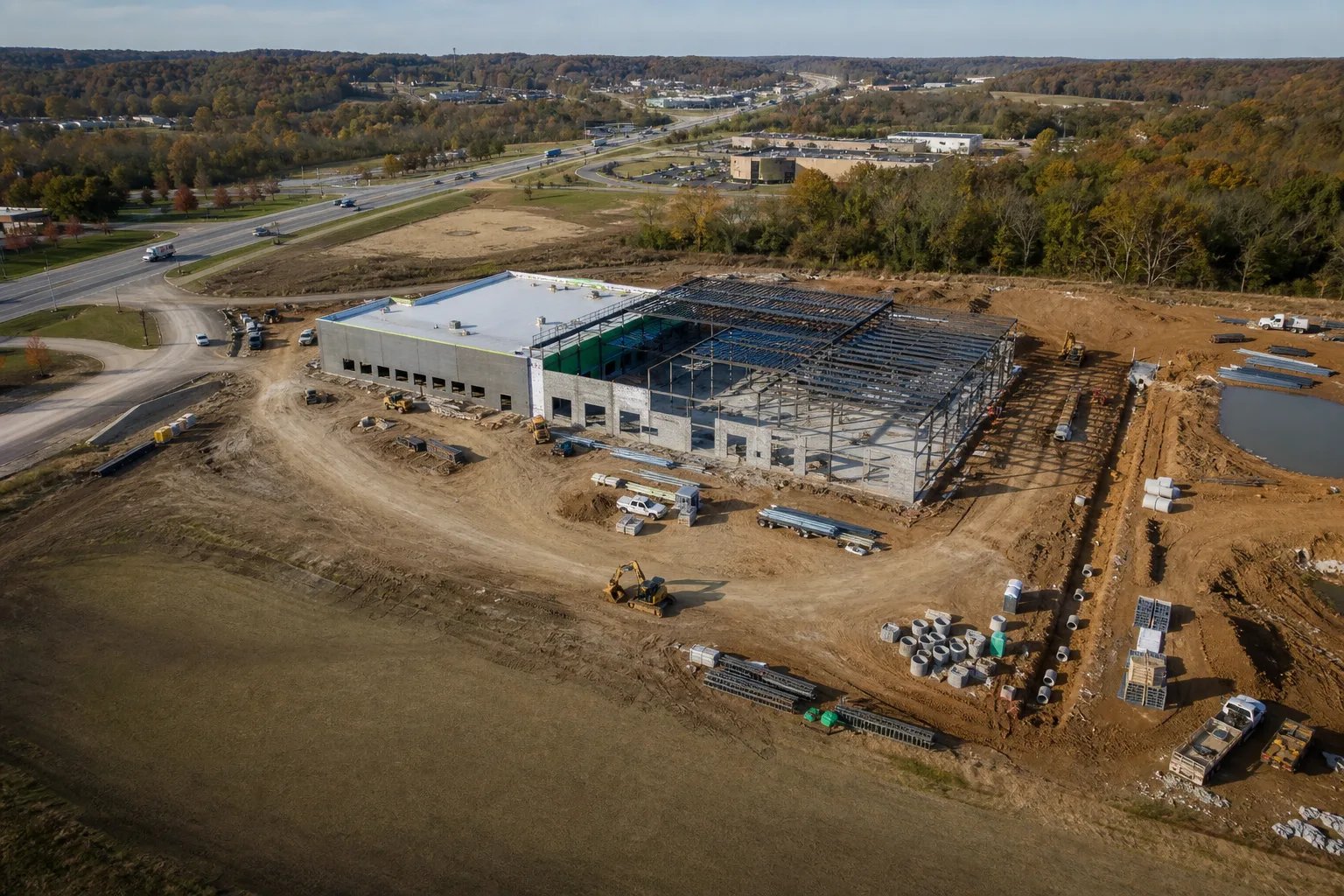
Project Planning
- Preconstruction budget and schedule review
- Permitting, inspections and owner reviews tracked to closeout
- Specialty trade partners scheduled, coordinated and supervised by our superintendent
- Closeout records, warranties and as-built drawings delivered with the building
A guaranteed maximum price is a promise, and a promise is only as good as the work behind the number. Construction management at risk puts the contractor at the table while the architect is still drawing, then asks the contractor to stand behind a price once the design has developed far enough to build. The owner keeps the designer of choice, and the builder takes on cost and schedule risk.
This method fits many of the kinds of owners we meet across New Mexico. Eastern New Mexico University announced $11.483 million in capital outlay funding in April 2025 for the Portales campus, including $6.5 million to complete a new Student Academic Services building. Cannon Air Force Base near Clovis was reported to be receiving over $80 million for a 192-bed dormitory and a security forces training facility. Gallup-McKinley County Public Schools covers 4,857 square miles and lists 33 schools. Projects like these must balance a fixed budget, a public process and a hard completion date.
We listen first to the owner's goals and funding limits, then we list the unknowns in the site, the design and the market. A good CM at risk team reduces those unknowns before they become change orders.
Where Owners Choose This Method
CM at risk suits projects where the design is complex, the budget is firm and the owner wants a contractor's advice during design. Schools, public buildings, hospitals and campus projects often fall into that group. It also suits private owners who want an open-book process with a ceiling on cost.
In smaller communities, the method has the added benefit of local engagement. A CM at risk firm can help recruit trade partners, bundle packages to match local capacity and share information about the schedule with the community. Work for education institutions and public owners often relies on that approach.
Preconstruction, Buyout and Open Books
In the preconstruction phase, we prepare estimates at each design milestone, review constructability, identify long-lead items and help the owner evaluate alternates. We also help divide the work into bid packages that fit the local market. The goal is to arrive at the guaranteed maximum price with a design the market can build and a budget that holds.
During buyout, we bid the packages, level the proposals and recommend awards. The owner sees the numbers, and savings return to the owner according to the agreement. In construction, we manage the schedule, cost, quality and safety while keeping the books open. If a package comes in high, we work with the designer to find a solution before the owner is surprised.
What Sets the Guaranteed Maximum Price
The guaranteed maximum price includes the cost of the work, general conditions, fee and contingency. The contingency is a shared tool: it covers genuine unknowns, and it is reported to the owner regularly. We explain how it will be used and who decides.
Several factors move the number: the completeness of the design when the price is set, the state of the market and the amount of site risk. Setting the price too early can leave too many unknowns, while waiting too long can delay the start. We help the owner choose a point that balances certainty and speed, drawing on our preconstruction estimating work.
Phasing on Campuses and Bases
Many CM at risk projects take place inside operating campuses or bases, where classes, patients, aircrews or residents keep going while we build. Access control, badging and background checks can slow mobilization, and haul routes may cross areas that cannot be disturbed. We bring those constraints into the guaranteed maximum price so the owner does not discover them in the field.
Seasonal windows matter too. School work is timed to summer break, and base work may depend on training cycles or security events. We build the schedule around these dates, protect long-lead orders so the work can start the day access opens and keep a few spare days for weather. A dormitory or classroom wing that opens on time is worth far more than one that is a few percent cheaper but late.
Safety and Payment Protections on Shared Sites
A CM at risk firm is responsible for coordinating many trades on one site, and safety is part of that role. We prepare a site safety plan, hold regular meetings and require each trade partner to follow it. On public sites, we also manage visitors, school-day access and security.
We keep careful records of payments, lien waivers and certified payroll where required, so the owner can see that subcontractors and suppliers are paid correctly. On phased or occupied projects, our phased construction on occupied sites experience helps us protect students, patients and staff.
State Licensing and Procurement Fit
The construction manager must hold the right license for the work. The GB-98 General Building classification requires four years of foreman level experience, at least two of them commercial, and covers erecting, altering, repairing or demolishing residential and commercial buildings and certain structures. Subcontractors must hold their own classifications for specialty trades.
Public owners may have procurement rules that govern how CM at risk firms are selected and how packages are bid. We follow the owner's rules and support the process with qualifications, fee proposals and documentation. Owners should check with their legal counsel about the method that applies to them, and we are glad to describe how it has worked on projects like theirs.
Related Delivery Choices
Some owners prefer one entity to carry both design and construction, in which case design-build delivery may fit better. Others want a lowest-bid process with a complete design. We discuss each option honestly and say where each is strongest.
Our work with government and public sector owners shows how CM at risk plays out on public work, and our experience in Portales and Clovis reflects the kinds of campus and base projects the method serves.
Talk Through Your Delivery Method
Share your project, your funding and your timeline. We will explain how construction management at risk would work for you, and where another method might be better.
Questions Owners Ask
What does 'at risk' mean?
It means the construction manager commits to deliver the project for a guaranteed maximum price and bears the risk of cost overruns, except for changes the owner approves. The contractor also guarantees performance of the work. The owner benefits from cost certainty and an advisor during design.
Who selects the architect?
The owner does, in most cases. The construction manager works alongside the architect but does not replace them. We aim to be a collaborator who helps the designer meet the budget.
What happens to savings?
Savings below the guaranteed maximum price are handled as the agreement states. Many agreements return them to the owner, and some share a portion with the contractor. We recommend a clear, open-book approach so everyone trusts the numbers.
How is the contingency used?
Contingency covers unknowns and is reported regularly. Use of the owner's portion requires approval, and the contractor's portion covers items such as minor coordination issues. We show the owner a running contingency balance every month.
Can small, local trade partners participate?
Yes. We design bid packages to match the capacity of the local market and reach out to contractors early. Smaller packages often help local firms participate and can increase competition.