Project Planning
- Preconstruction budget and schedule review
- Permitting, inspections and owner reviews tracked to closeout
- Specialty trade partners scheduled, coordinated and supervised by our superintendent
- Closeout records, warranties and as-built drawings delivered with the building
Sunland Park is changing shape on paper before it changes on the ground, and an owner who wants to build here benefits from a contractor who can read an annexation proposal as easily as a set of drawings. According to an August 26, 2026 Albuquerque Journal article, the city's revised Rancho Santa Teresa annexation proposal covers approximately 362 acres, and the city projects it would add $50 million to the local economy. Land coming into the city limits needs roads, water, sewer, drainage and a clear zoning picture, and that is the stage at which we get involved.
We help landowners and developers decide what to build first. In many cases that is commercial pads for the neighborhood retail and services that a growing workforce needs, followed by offices, medical clinics and light industrial space. We price the utilities and offsite improvements first, since those numbers decide whether a parcel pencils out.
The city also sits close to a significant concentration of regional industry. The Santa Teresa industrial complex, according to a November 2019 Border Report article, supports more than 5,000 jobs and was part of a state-backed plan that included a $40 million expansion of a Union Pacific swap yard and 2,400 linear feet of new in-house railroad tracks. Workers and suppliers for that complex create demand next door in Sunland Park, and we build for them.
Why builders pay attention to this corner of the state
Santa Teresa, an unincorporated community near Sunland Park, is home to the Santa Teresa Port of Entry and the 1,100 acre Santa Teresa Gateway Rail Park, served by the Santa Teresa Southern Railroad. In May 2022 ABC-7 reported that $500,000 in federal funds was allocated to upgrade the port of entry and that private builders were constructing speculative warehouses of 365,000 and 135,000 square feet. The tenants of those buildings need nearby truck services, offices, food service and housing.
Sunland Park is where a lot of that support work lands, from hotels and restaurants to storage yards and service shops. We follow the planning calendar and the local market closely, and when you share a site with us we can usually tell you which of those uses has the strongest demand right now. For the logistics side of the story, see our work for logistics and distribution owners and our page on Santa Teresa.
Pads, shops and support buildings
Most of our scope here is practical: grading and utilities for a pad, a commercial building in a metal or masonry shell, parking and drainage, and a tenant buildout ready for the first store. We try to keep the site design simple and drainage correct, since low-lying land near the river can collect water in storms.
For service-oriented users such as truck repair, equipment yards and warehouses for trade suppliers, we build pre-engineered shells with tall doors, a strong slab and sealed yard paving. When the user is a retail or food business, we focus on frontage, access and signage, and coordinate with the tenant's own contractors so the opening date is held.
Concrete and sitework we manage closely
Sunland Park sits next to the Rio Grande at the foot of Mount Cristo Rey, with a listed elevation of 3,740 feet. That position means river-valley soils on one side and rocky ground on the other, and we plan foundations and excavation differently for each. Our foundation work follows the geotechnical report closely and adjust when the field condition differs.
Because we manage the concrete and paving trades closely, we can control quality, schedule and cost at the places that matter most. The summer heat is hard on both, so we order mixes designed for hot weather, start early, and cure properly.
Hospitality, gaming and community uses
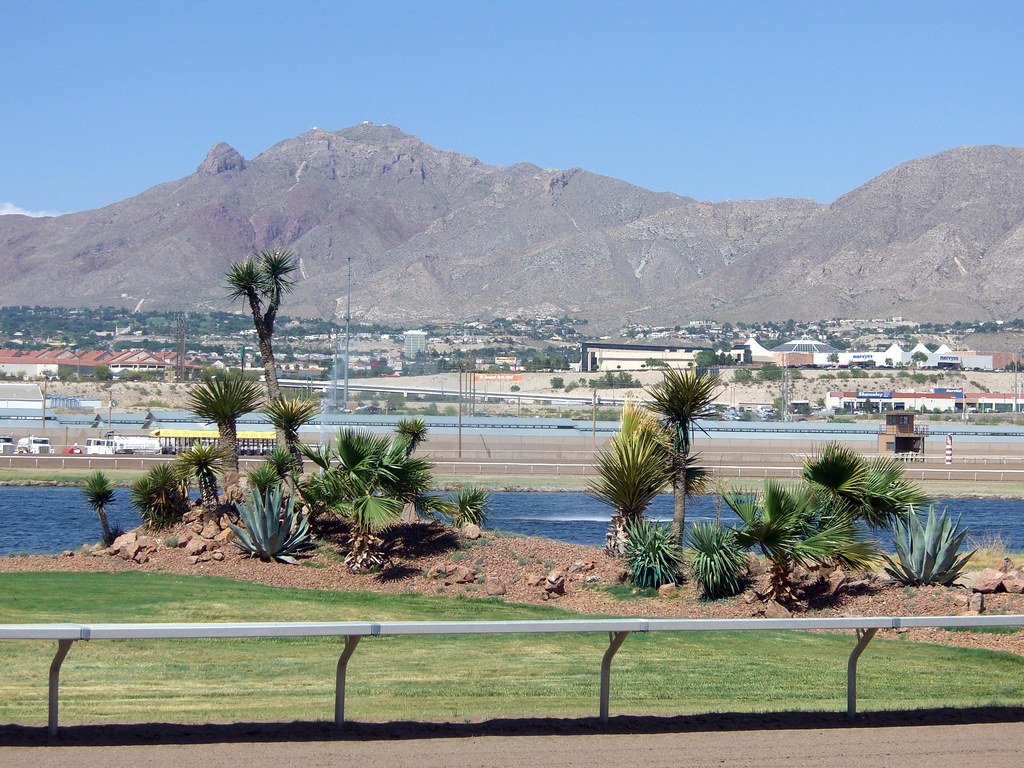
The Sunland Park Racetrack and Casino is located in the city, and it shows the range of building types in this market. Hospitality, entertainment, event space and parking are real categories here, and the hotel and hospitality trade partners are comfortable with guest rooms, back-of-house areas and the fire and life safety systems they demand.
Community buildings, schools, clinics and municipal facilities also come up as the city grows. Our government and municipal work includes public works yards, fire stations and offices, delivered under the procurement rules that apply.
Choosing between nearby markets
Owners with flexibility often compare Sunland Park with Las Cruces, where an industrial park at the I-10 and I-25 junction offers shovel-ready land, and with Santa Teresa itself. We prepare a comparison of land, utilities, labor and approvals so you can see the whole picture instead of only the lot price.
Whatever you choose, a project that includes food service or lodging usually benefits from early preconstruction estimating, and a development with several buildings may be better handled through design-build delivery.
Border-region realities we plan for
Projects near the border can face different lead times, shipping routes and workforce patterns than inland jobs. We account for these in our schedules by ordering early, by keeping multiple sources for critical materials, and by keeping a clear paper trail on deliveries. Security and access requirements at nearby ports and rail yards sometimes also affect how we stage equipment.
The Santa Teresa airport area served by the Dona Ana County International Jetport also generates work for hangars and support space. Whether you are developing a few acres or a larger master plan, we begin with a reality check on utilities and zoning before design starts.
Bring us your Sunland Park parcel
Share what you are planning and where the land stands in the approval process. We will tell you what it is likely to cost to build and what to do first.
Questions Owners Ask
What does annexation mean for my construction schedule?
If land is moving into the city, the order of approvals matters. Zoning, utility agreements and subdivision review each have their own timeline, and the construction start depends on them. We map them with you and avoid spending on design that may have to change.
Can you build both retail pads and industrial-support buildings?
Yes. The two uses have very different priorities, with retail focused on access and appearance and industrial support focused on trucks and floors. We assign separate teams and estimates to each so neither suffers.
Is the ground near the Rio Grande a problem?
Soils near the river can be soft, wet or variable, and a geotechnical report tells you how to design around them. We use that information to select foundation types and to plan site drainage. It costs far less to study the ground first than to repair a settling slab.
How do you manage hot summers on a project?
We schedule heavy concrete and roofing early in the day, use hot-weather concrete practices and give crews shade and water. Where possible, we place structural work in cooler months and leave interior work for the heat of summer.
Do you work with the same code as the rest of the state?
Yes. New commercial work follows the 2021 New Mexico Commercial Building Code, which adopts the 2021 International Building Code as amended, effective July 14, 2023. We confirm electrical, plumbing and mechanical editions with the reviewer at the start of every project.