Project Planning
- Preconstruction budget and schedule review
- Permitting, inspections and owner reviews tracked to closeout
- Specialty trade partners scheduled, coordinated and supervised by our superintendent
- Closeout records, warranties and as-built drawings delivered with the building
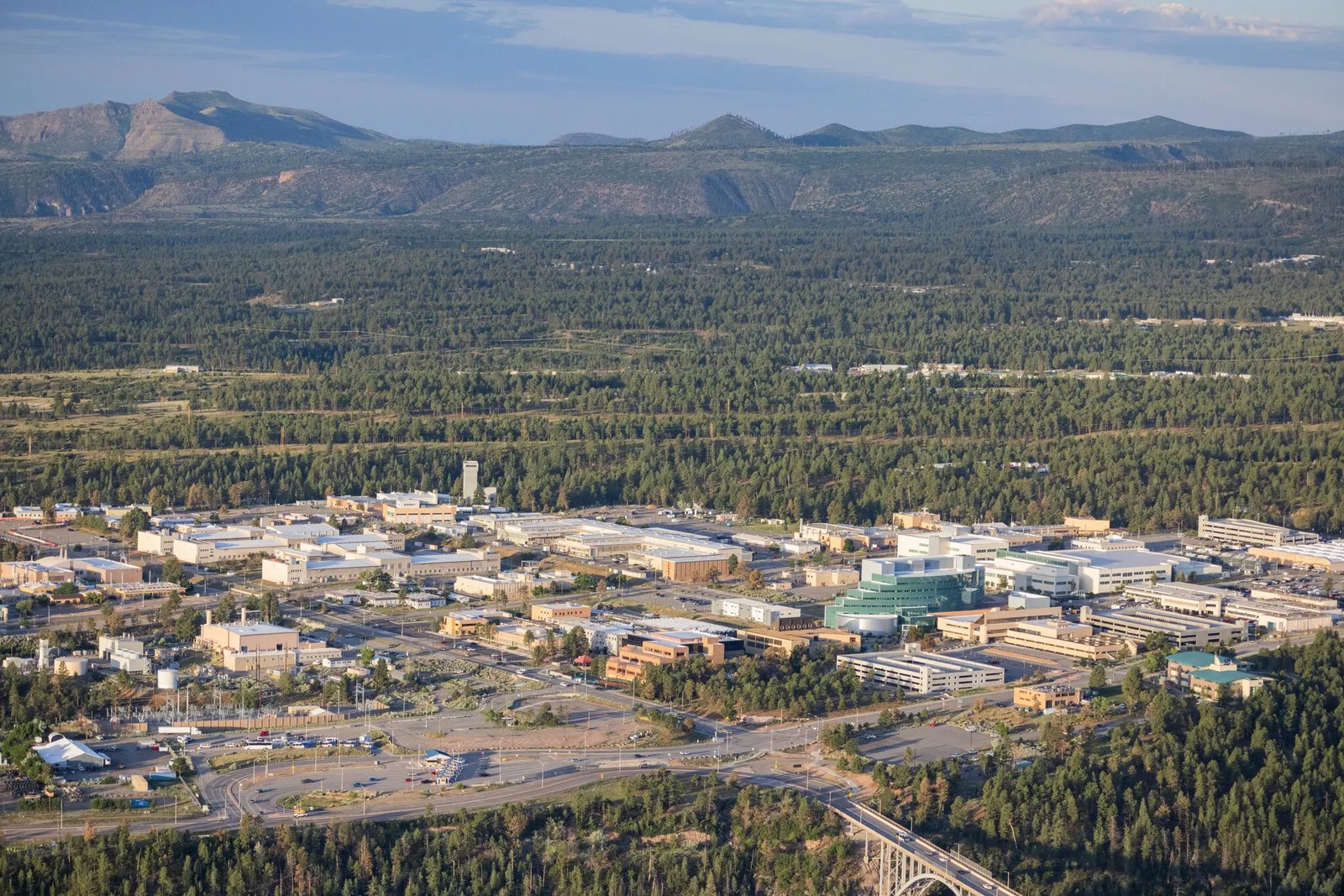
Getting a crew, a crane and a load of rebar up the hill to Los Alamos is the first piece of any project there, and the town has only two ways in. NM 4 and NM 502 are the only access roads, and NM 502 is the main route to the laboratory, an 18.301-mile highway from Los Alamos to US 84/285 in Pojoaque that has been a safety corridor for most of its length since November 2005. We plan every delivery, shift change and oversize haul with that single funnel in mind.
The reason owners build here is Los Alamos National Laboratory, which reports a workforce of about 14,150, almost 900 individual facilities including 13 nuclear facilities, and 8.4 million square feet of buildings on almost 40 square miles of DOE-owned property. Work for or near a site like that involves badging, escorted access, security screening and quality documentation, and we plan for them from the first conversation.
We are a general contractor, not a laboratory operator, and we do not claim past work for any one client. What we offer is a disciplined way of building on a constrained mesa: early coordination with the owner, careful scheduling of every truck, and trade partners who understand security and safety rules.
Owners also ask us about housing and services for a workforce that has to live somewhere. Where a project adds multifamily apartments or retail on the hill, we apply the same logistics discipline: staged deliveries, careful lay-down and an early look at how inspections will be scheduled for a building that few inspectors can reach quickly.
Access, badging and safety on a secure mesa
Projects in and around the laboratory often require screening of workers and equipment, restrictions on cameras and phones, and escorts for deliveries. We ask for the owner's requirements before we price, then build the cost and the time of those requirements into the estimate. A crew that waits at a gate is paying for nothing.
Safety documentation follows the same logic. We prepare job hazard analyses, lift plans and written procedures in the format the owner expects, and we keep records current. For nuclear-related or other regulated facilities, the owner's engineers set the technical requirements, and our role is to build to them exactly and report clearly.
Codes and approvals for work on the hill
Commercial buildings follow the New Mexico Commercial Building Code, which adopts the 2021 International Building Code as amended and took effect July 14, 2023. Federal sites may layer additional DOE or project-specific criteria on top of those rules, and owners usually provide them. We read the whole stack of requirements, not just the state code, before we start drawings.
Wildfire is a design topic here. The Cerro Grande Fire began as a controlled burn on May 4, 2000 and was declared extinguished on July 20, 2000, and the US General Accounting Office estimated total damages at $1 billion in 2000 dollars. Owners reasonably ask about fire-resistant materials, defensible space, sprinkler coverage and exterior details. We build the options into early pricing so the choice is informed.
What we build for owners in Los Alamos
Typical private work in town includes offices, labs and research support space, medical and professional buildings, retail, restaurants and housing-related projects. The commercial construction trade partners handle interiors in occupied buildings, and the tenant improvement trade partners reconfigure space for a new occupant.
Institutional owners and contractors who support a large employer often need renovations that keep people working. We phase demolition, rough-in and finishes, protect adjacent spaces from dust and noise, and coordinate utility shutdowns well in advance. Because the town is small and busy, we also try to schedule noisy work around the daily rhythm of the staff.
Scheduling around a single road
Because NM 502 is the main access to the laboratory, a delivery truck breakdown or a closure on the highway can affect the whole job. We consolidate deliveries, schedule them outside peak commuting periods, and stage materials in a secure yard. Concrete is ordered for early starts so trucks arrive before traffic builds.
We include time for the route itself. The highway runs 18.301 miles to Pojoaque, and a late truck in winter can arrive after the concrete has begun to set. Our long-lead procurement process keeps every critical order on a written date, and we revise the schedule the day we learn of a change.
Winter adds its own constraints at this elevation. Snow, ice and early darkness shorten the working day, so we enclose buildings before the worst weather and keep a snow-removal plan for the yard and the access drive. A plan made in October saves a lot of improvisation in January.
A high, small, specialized market
Los Alamos sits at about 7,300 feet and had a 2020 census population of 13,179. Los Alamos Airport has one asphalt runway, 9/27, at 6,000 by 120 feet and sits at 7,171 feet, which matters to owners who bring specialists in by air. The laboratory was set up in 1943 for the Manhattan Project, sits about 35 miles northwest of Santa Fe, and reports a $39.1 billion replacement plant value.
A replacement value like that tells you how much aging infrastructure there is to maintain. For a contractor, it points to a market built on renovation, repair and replacement as much as on new construction. Government and public sector owners should expect us to talk about life-cycle cost, maintainability and how a building will be inspected and serviced for years.
Discuss your Los Alamos project
Send us the site, the scope and the access rules you work under. We will review them with you and respond with a schedule and budget range that reflects the realities of the hill.
Questions Owners Ask
Can you work inside a secure site?
We can, provided the owner approves the project workforce and equipment under its process. We plan for screening, escorts and restricted items from the start. Some work will call for specialty subcontractors with the right clearances, and we will tell you early who they are.
How long does it take to get materials up to Los Alamos?
Material arrives by NM 4 or NM 502, and the transit itself is short, but the risk is a late or missed window. We stage materials in secure storage and schedule deliveries to avoid peak hours. For long-lead items we track the order weekly.
What should I consider for wildfire resilience?
Start with the exterior: roofing, siding, vents, decks and landscaping near the building. Add sprinklers, defensible space and water supply where the code and insurer call for them. We price those choices as options so you can decide with real numbers.
Do you also build in Espanola or Santa Fe?
Yes. Owners and trades often work across Espanola, Pojoaque and Santa Fe, and we can mobilize across the area. The same state codes apply, though local reviews differ.
What kind of contractor documents do you provide?
We provide schedules, submittals, daily logs, safety plans and close-out documents in the format the owner needs. Regulated or federal work may require additional records, and we agree on them before the contract is signed.