Project Planning
- Preconstruction budget and schedule review
- Permitting, inspections and owner reviews tracked to closeout
- Specialty trade partners scheduled, coordinated and supervised by our superintendent
- Closeout records, warranties and as-built drawings delivered with the building
Summer break gives a school district a window of roughly ten weeks, and that window decides how an education project is planned. A classroom wing, a gymnasium or a renovated science lab has to be finished, inspected and cleaned before students arrive, and the date does not move because a shipment was late. We start every school and campus conversation by finding the date that matters and working backward from it.
New Mexico education owners range from small rural districts with a single building program to universities with several campuses. Gallup-McKinley County Public Schools, for example, covers 4,857 square miles and lists 33 schools, which is the kind of geography that complicates deliveries, inspections and staffing. Community colleges, branch campuses and charter schools each have different procurement rules, funding sources and levels of internal construction staff, and we adjust our communication to match.
Education projects also carry public attention. Parents, teachers, board members and neighbors watch them closely, so we pay attention to safety, noise and traffic around the site and to keeping communities informed. Where bond or capital outlay dollars pay for the work, we keep clear records so owners can show how the money was used.
Education capital work across New Mexico
Education construction in New Mexico is driven by state capital outlay, local bonds and institutional budgets. In April 2025 Eastern New Mexico University announced $11.483 million in capital outlay funding for its Portales campus for the 25-26 fiscal year, including $6.5 million to complete the new Student Academic Services building, $2.5 million for HVAC repairs to the Science Building and $408,000 for agriculture equipment in the new Animal Production facility. That mix of new construction, mechanical repair and specialized equipment is typical of campus work.
San Juan College reports 1,048,266 gross square feet across 31 structures on five campuses, and fall credit enrollment of more than 9,200 students. Large multi-building campuses like that need continuous renovation, roof, mechanical and accessibility work, as well as new instructional space. Our school building work in Portales and other campus communities follows that rhythm of steady, phased investment.
Building to the first day of class
The calendar for a school project is built from the first day of class backward. Substantial completion comes first, then a cushion for punch list, cleaning, furniture and technology installation, then inspections and the certificate of occupancy. Behind those are the finishes, the building systems and the structure. Long-lead items, such as roof systems, mechanical equipment and gym flooring, must be ordered with the final date in mind.
Summer work compresses a year of activity into a few weeks, so we pre-purchase materials, stage them nearby and plan overlapping crews with great care. During the school year, work in an occupied school requires separate entrances, protected corridors, noise limits and controlled deliveries. A phased plan in which one wing is finished while another remains in use is common, and it relies on the same skills as phased construction on occupied sites.
Protecting students, staff and visitors
Safety on a school site starts with separation. Construction fences, controlled access, gated haul routes and background-checked workers where required keep students and construction apart. Deliveries are scheduled outside arrival and dismissal, and crane picks happen when the campus is quiet. We coordinate with the principal and the district's facilities staff so that they know what is happening each day and can answer questions from parents.
Inside the building, fire alarm, sprinkler and egress systems must remain functional, and temporary measures are required when systems are shut down. Dust control, air quality and noise matter in classrooms, and we protect adjacent spaces with barriers and negative air where appropriate. We also review fall protection, trenching and electrical safety on every task, because a school site draws more eyes than most.
Schools, colleges and specialty spaces
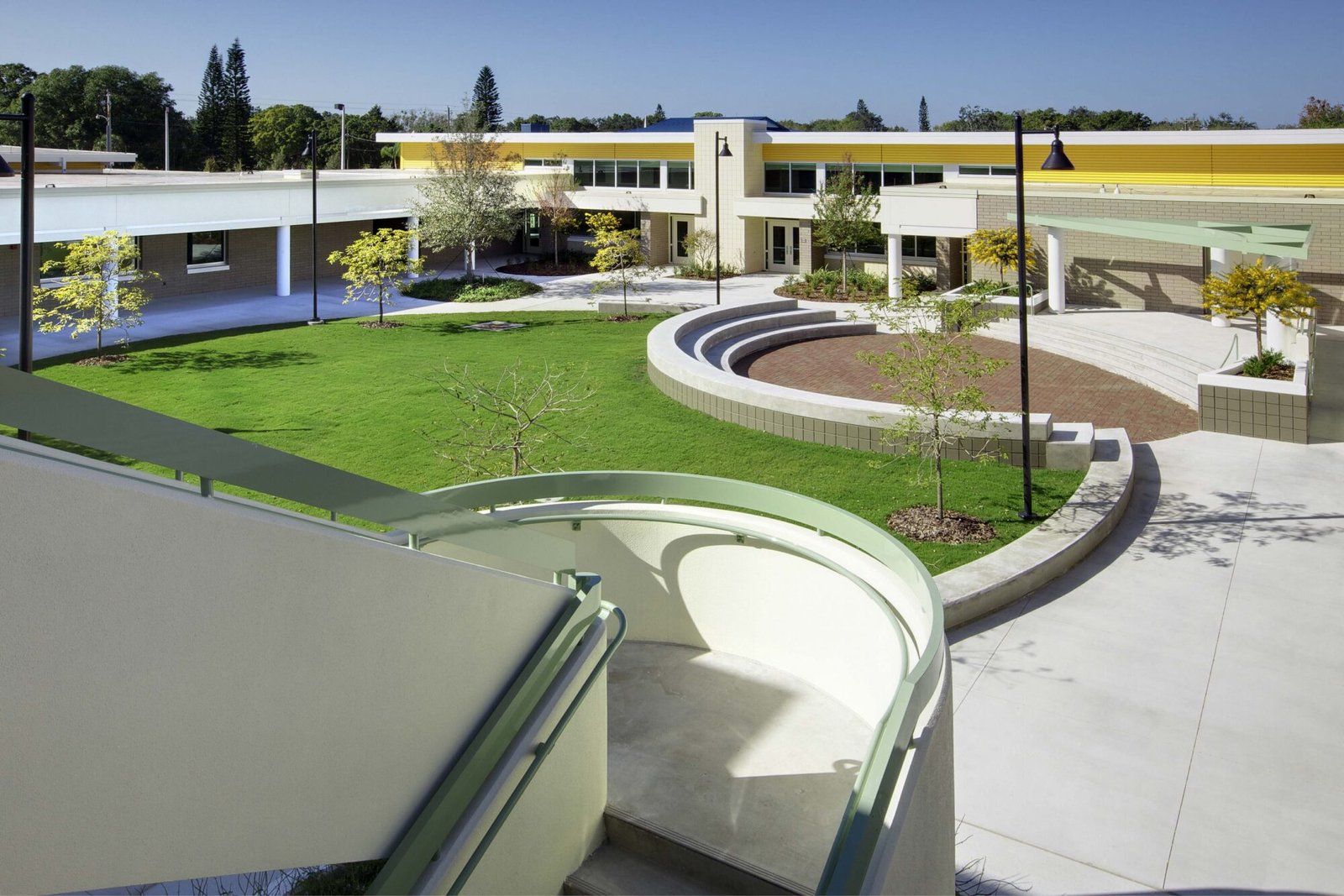
Our education work includes new elementary, middle and high schools, additions, gymnasiums and auditoriums, career-technical labs, science buildings, student services buildings and renovations. The scope usually includes site work, parking and drop-off, playfields, and security and technology systems. Specialized spaces such as kitchens, labs and shops require additional coordination with equipment suppliers.
Higher education adds another layer. Santa Fe Community College's 366-acre campus sits about 12 miles southwest of the city center, and Socorro's New Mexico Institute of Mining and Technology reported 987 degree-seeking undergraduate students and 486 degree-seeking graduate students as of fall 2024. Campuses like those need labs, student housing, learning commons and utilities that serve many buildings. We coordinate with student housing construction and the rest of the campus plan so projects fit together.
Where school and campus budgets go
Public education budgets are fixed by funding sources, so cost control is crucial. The largest drivers are building size, site conditions, mechanical systems, security requirements and the level of finish. Remote locations add travel and delivery costs. Mechanical systems in particular matter over the building's life, so we help owners compare first cost with operating cost.
We help districts and institutions get the most out of every dollar by pricing alternatives during design, standardizing details across buildings and bidding trade packages in a way that encourages local participation. Through municipal and government construction experience, we are familiar with the paperwork and approvals that public owners require, and we keep our records ready for audits. Our work for education institutions reflects that discipline.
Plan your school project around the calendar
Tell us the building, the funding and the date students need it. We will lay out the milestones and the questions to settle first, and we will keep the district informed along the way.
Questions Owners Ask
Can a school renovation really be done in one summer?
Many can, if planning starts early. Materials are ordered and staged before school ends, crews are scheduled in overlapping shifts, and inspectors are booked in advance. Larger projects may take two summers, with temporary classrooms or phased occupancy between. We tell owners honestly which scope fits in a break.
How do you build in rural districts with long distances?
We plan for travel, lodging and delivery time in the schedule and price. Some work is done by trade partners who live nearby, and we bring in outside crews where specialized skills are needed. Early coordination with the district lets us stage materials and avoid unnecessary trips.
What is the difference between capital outlay and bond funding for us as a builder?
Each source has its own reporting rules, timelines and spending restrictions. Capital outlay and bonds each carry their own reporting rules and spending limits. We ask the owner to share the funding terms at the start so we can match the schedule and documentation to them.
Do you handle security upgrades in schools?
Yes. Secure entries, cameras, access control, communication systems and hardening of glazing are common scopes. These upgrades often happen in occupied buildings, so we sequence them with the school's operations team to keep the campus safe during the work.
What closeout documents do school districts need?
Typical requirements include as-built drawings, operations and maintenance manuals, warranties, test and balance reports, inspection approvals and training for the district's maintenance staff. We organize them by system and provide both printed and electronic copies.